Maternity is the one clinical area where the record is a timeline rather than a set of visits. A pregnancy runs nine months, is seen by several people, and ends in a few hours where everything written earlier suddenly matters. A system that treats each antenatal visit as an isolated consultation — the way a general OPD does — loses exactly what makes the record useful.
This guide covers how antenatal care is recorded visit by visit, and how the labour ward uses that record through delivery.
Dating the pregnancy
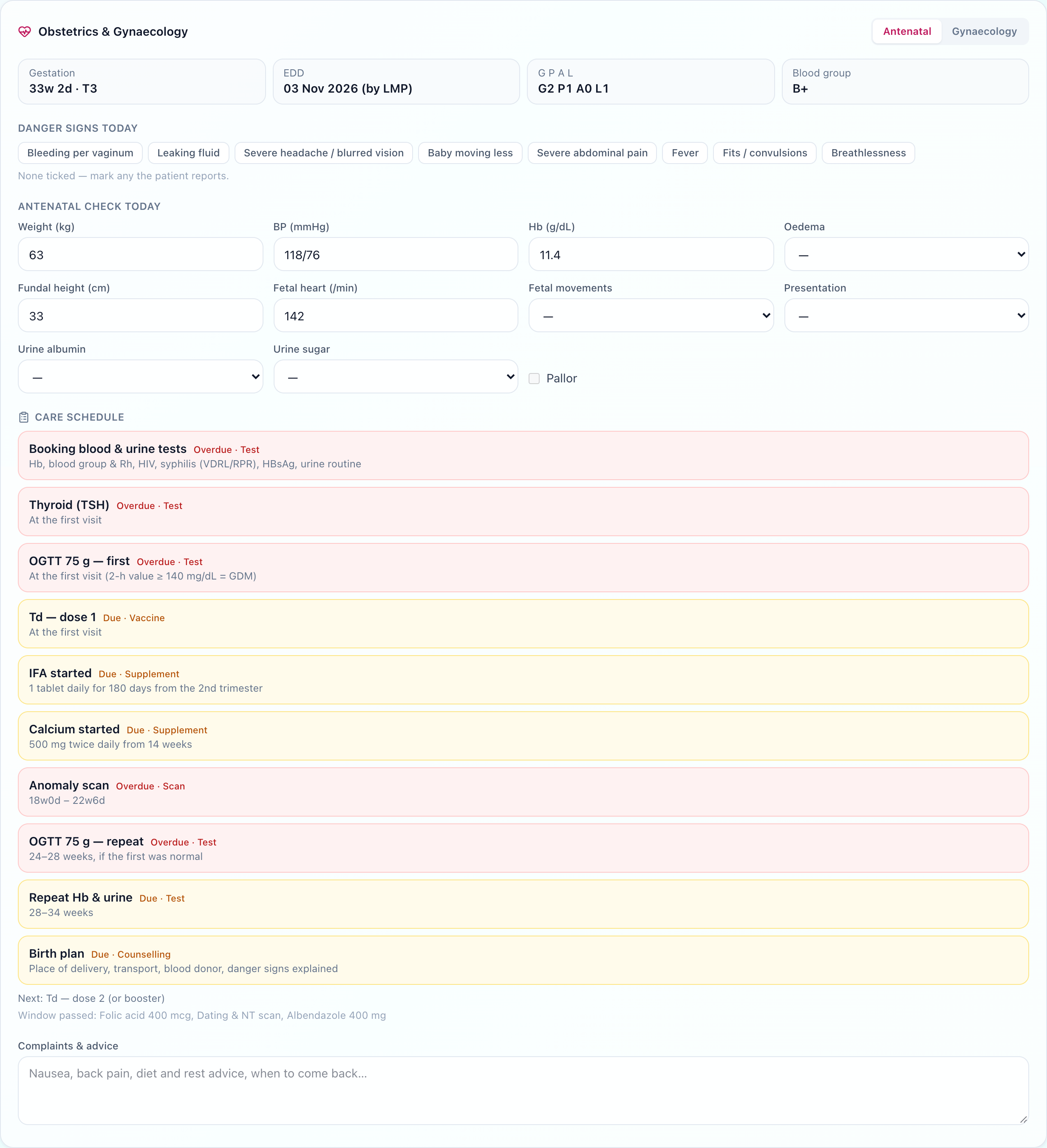
Everything downstream rests on the dates. The expected date is first calculated from the last menstrual period; an early scan measures gestational age directly and is usually the better estimate. Where the two disagree by more than an accepted margin — a handful of days in the first trimester, widening as pregnancy advances — the scan should take over.
Record which basis was used
Alongside it sits the obstetric history in its usual shorthand — gravida, para, living, previous caesareans — because a second pregnancy after a caesarean is a different clinical situation from a first, and the labour ward needs that at a glance rather than in a paragraph.
The visit itself

An antenatal visit records the same handful of things each time: weight, blood pressure, fundal height, fetal heart rate, urine albumin and sugar, haemoglobin, and later the presentation. Recorded consistently they form a trend — a blood pressure climbing over three visits is a finding, while the same readings scattered through free-text notes are not.
The schedule, and what has been missed
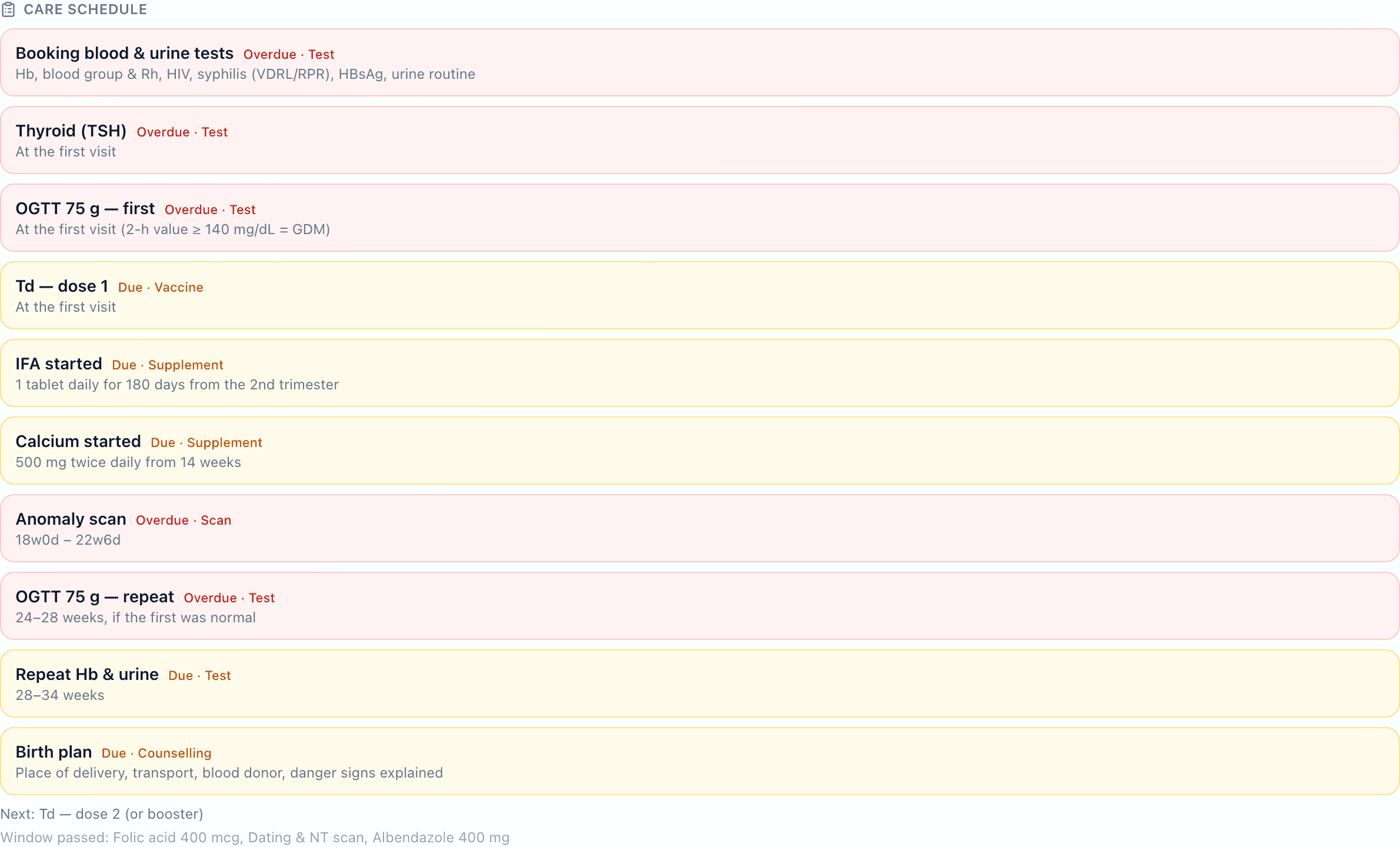
India's antenatal guidance defines a minimum number of visits and a set of things that should happen across them — tetanus doses, blood group, haemoglobin, the anomaly scan, iron and calcium. The value of holding that as a schedule rather than a checklist in a book is that it can say what is overdue at 34 weeks, not merely what has been ticked.
The labour ward
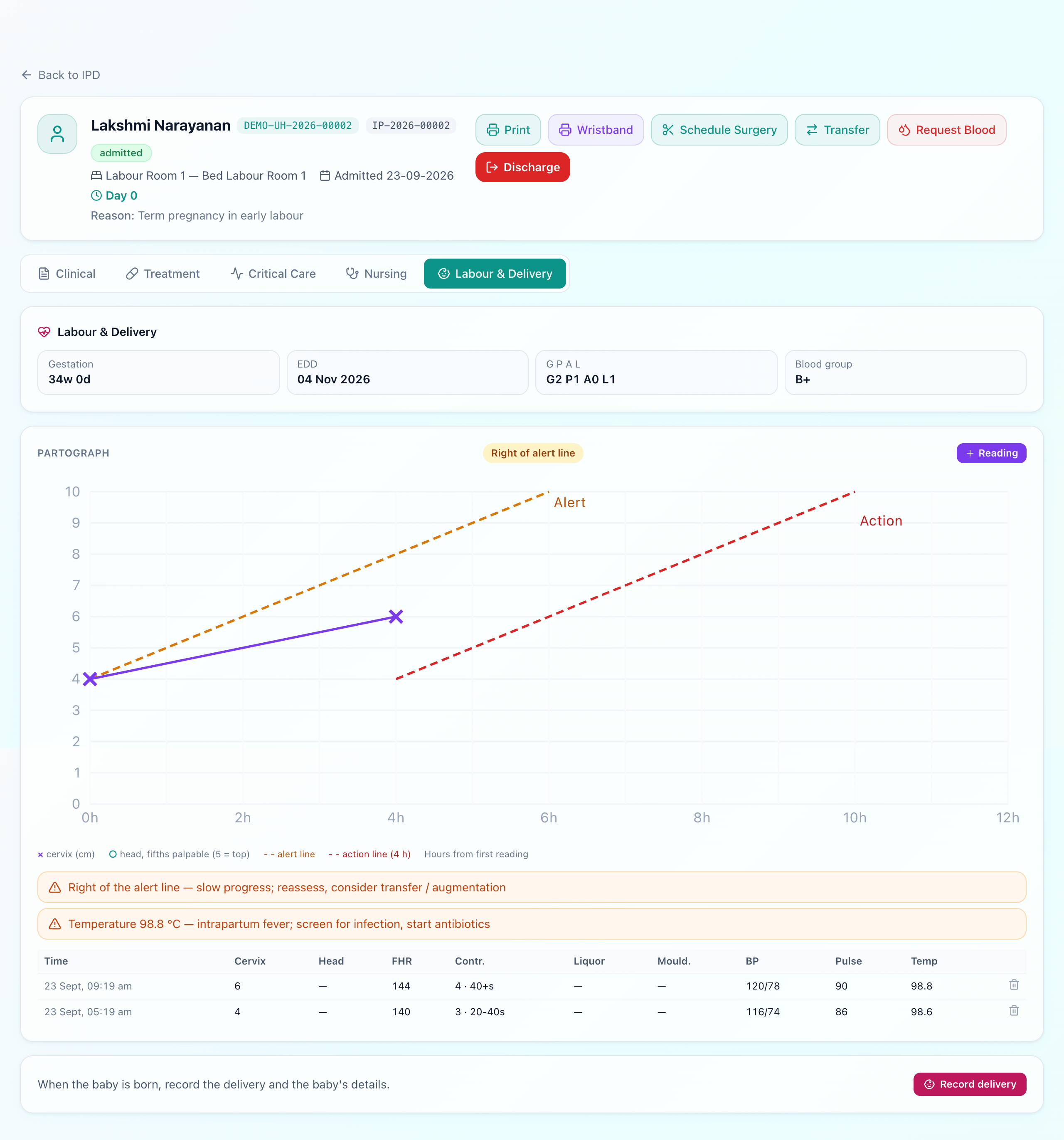
When the mother is admitted, the pregnancy record comes with her. Labour is then recorded as a partograph: cervical dilatation plotted against time, with the fetal heart rate, contractions per ten minutes, and the mother's pulse, blood pressure and temperature beside it.
Its point is early warning. Dilatation is expected to progress at roughly a centimetre an hour once labour is established; an alert line marks that pace and an action line sits a few hours to its right. Crossing the alert line means labour is slow, and crossing the action line means a decision is overdue. On paper this is drawn by hand while a midwife is also managing the labour, which is why in practice it is often written up afterwards — when it can no longer warn anybody.
Delivery, and the second patient
A delivery record covers the mode, the time, who conducted it, and the condition of mother and baby. Then there are two patients where there was one. The newborn needs their own record — their own identity, their own growth chart and immunisation schedule starting with the birth dose — created from the delivery rather than typed again at the front desk, and linked back to the mother.
Postnatal observations continue for both. The charges from admission, delivery, theatre if it was a caesarean, and pharmacy land on one bill — see the IPD billing guide.
What Uyirly does
- Pregnancy dated from LMP or an early scan, with the basis recorded and re-dating limits applied.
- Gravida, para, living and previous caesareans carried on the record.
- The same antenatal measurements each visit, forming a trend rather than scattered notes.
- A care schedule that shows what is done, due, overdue or still upcoming at this stage.
- Danger signs and risk factors flagged from what has been recorded.
- A partograph in the labour ward with alert and action lines.
- Delivery and baby records, with the newborn registered as their own patient from the delivery.
- Postnatal observations, and every charge on the same bill.
Getting started
Antenatal care appears in consultations once a department is set to the obstetrics and gynaecology template, and the labour ward panel appears on an admission for a mother under that department. It is part of Uyirly's hospital management software. Start a 30-day free trial — no credit card.