An operation theatre is the most expensive room in a hospital, and the one most easily wasted. The two ways it goes wrong are mundane: two cases booked into the same room at the same time, and a case that runs without anyone recording what was used in it.
The list
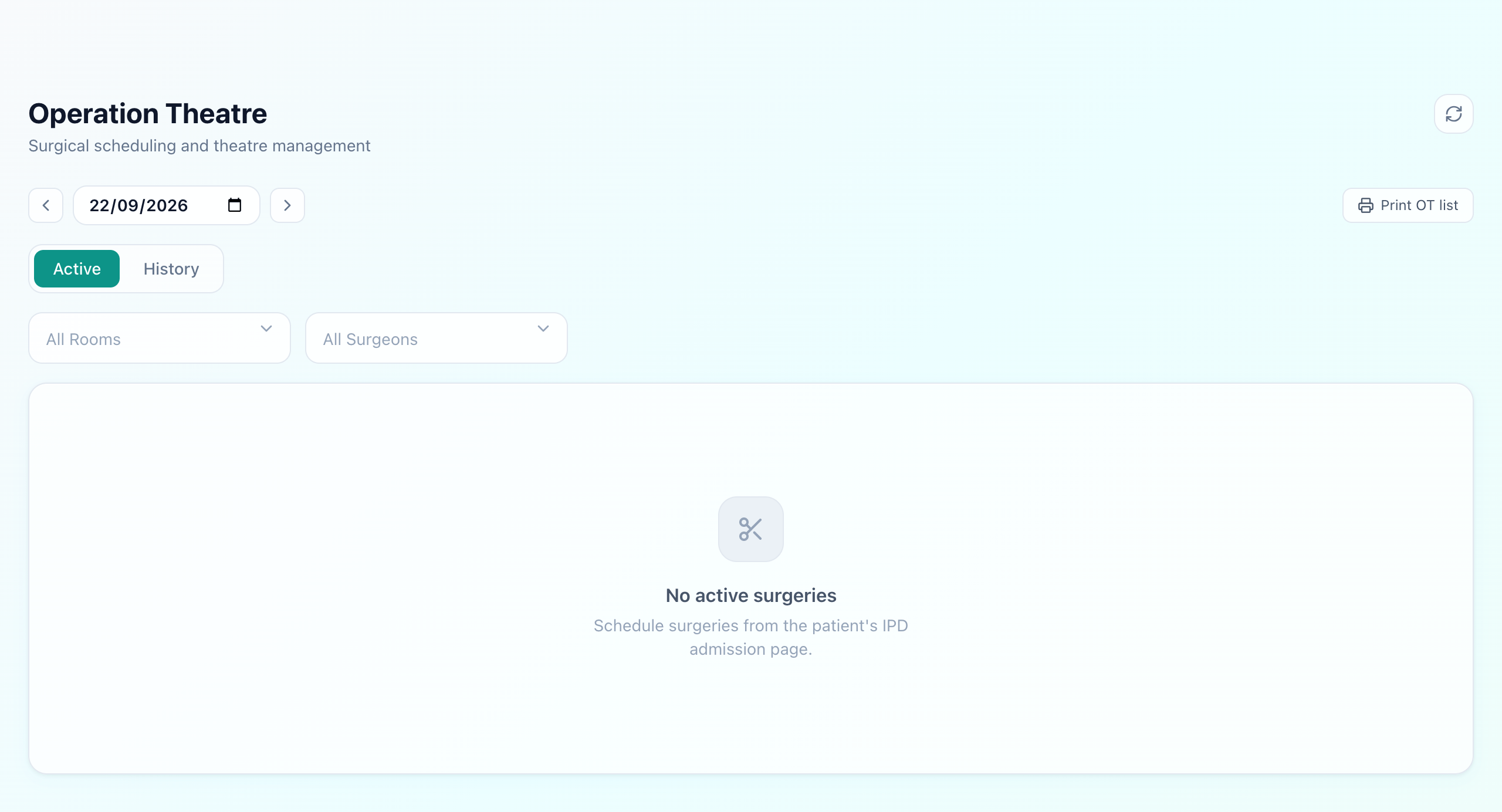
A case carries the procedure, the surgeon, the anaesthetist, the theatre and a time slot. That last pair is where the discipline lives.
Double-booking, prevented rather than discouraged
Two cases cannot occupy the same theatre at overlapping times. This is not a warning the scheduler can click past — it is enforced by the database itself, with an exclusion constraint on the room and the time range. An attempt to move a case onto an occupied slot comes back as “Room already booked for this time slot” and simply does not save.
The distinction matters because a warning is only as good as the person reading it at seven in the morning, while a constraint holds regardless of who is scheduling or how.
Consumables and implants
What gets used in theatre is where the money leaks. Consumables and implants recorded against the case become charges on the patient's bill, rather than being reconstructed afterwards from a nurse's memory — see IPD billing for where those lines land. Billing happens when the case is marked completed, not when it is scheduled, because a scheduled surgery can still be cancelled or moved.
After the case
The operative note belongs on the patient's record, attached to the admission, where the ward team and any later doctor can find it. A post-operative bed can be assigned as part of the case, so the patient goes somewhere decided in advance rather than wherever is free at the door.
What Uyirly does
- A theatre list by day, with procedure, surgeon, anaesthetist, theatre and slot.
- Double-booking of a theatre prevented by the database, not by a warning.
- A surgical team recorded per case beyond the primary surgeon.
- Consumables and implants captured against the case and billed to the patient.
- Billing on completion rather than on scheduling.
- Operative notes on the patient's record, tied to the admission, with a post-op bed assignable.
Getting started
The theatre module is part of Uyirly's hospital management software, sharing a patient and a bill with the ward the patient returns to. Start a 30-day free trial — no credit card.