Immunisation is the one part of paediatrics where the clinic, not the parent, is expected to keep count. A child has around twenty separate doses before the age of five, each with an age it becomes due, a minimum gap from the dose before it, and consequences for the doses that follow if it is missed. Most clinics track this on a paper card the parent carries, which works until the card is lost, the family moves, or a dose is skipped and nobody recalculates what that does to the rest.
This guide covers how that tracking works when the clinic holds it — what the schedule knows, what happens after a missed dose, and how a vaccine goes from the fridge into the child's record.
The schedule is per child, not a chart on the wall
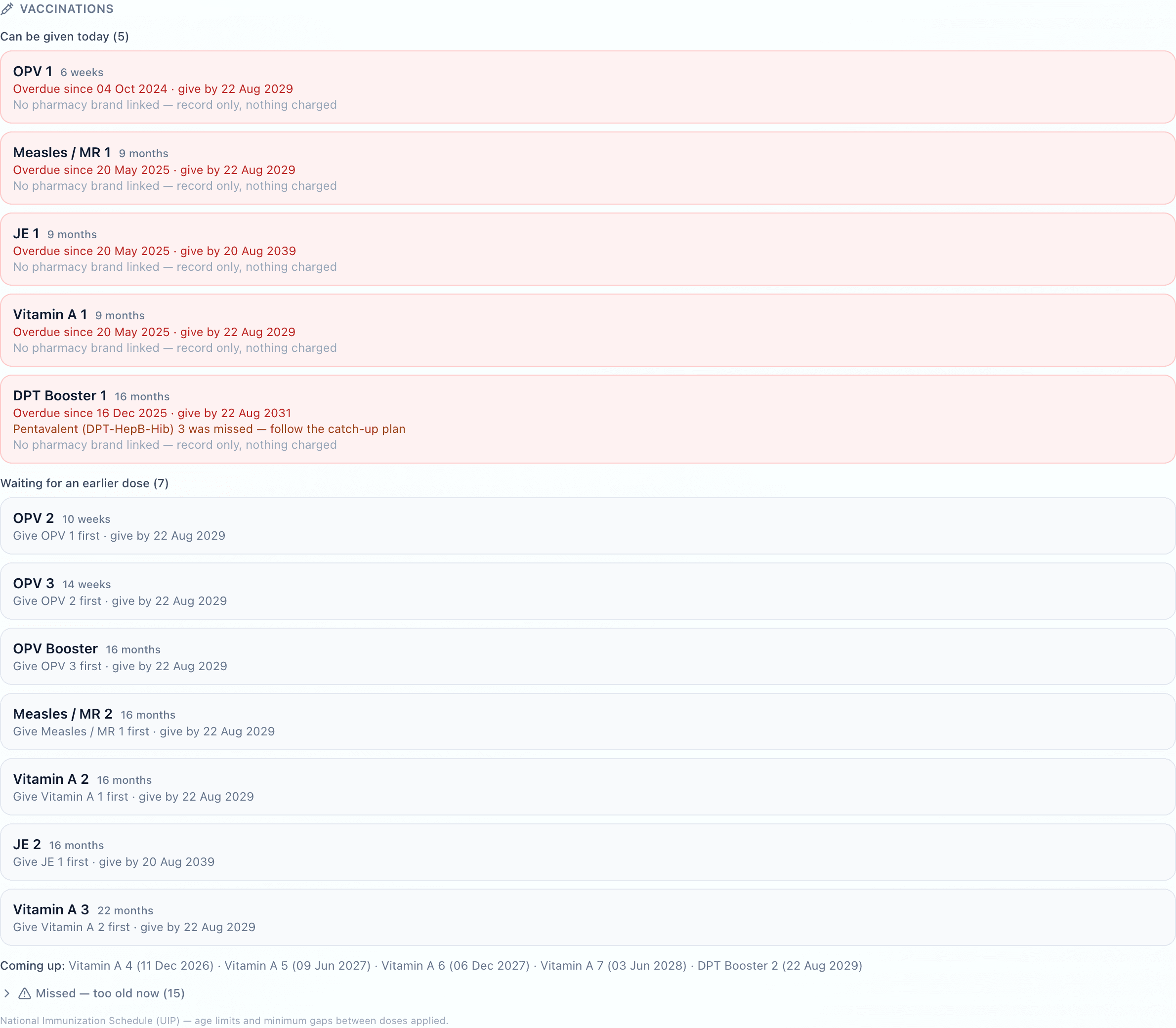
The same national schedule produces a different list for every child, because it is applied to their date of birth and their actual history. Each dose sits in one of a few states:
- Given — recorded, with the date if it is known.
- Due — the child has reached the age and any earlier dose has been given.
- Overdue — due some time ago and still not given, which is the list worth chasing.
- Waiting — the age has come but a dose it depends on has not been given yet.
- Upcoming — a date in the future, shown so a parent can be told when to return.
Grouping matters more than it sounds. A receptionist reading a flat list of twenty vaccines has to work out which ones are actually givable today; a list that already separates can be given today from waiting for an earlier dose removes that judgement from the counter.
Missed doses, and why the rest of the schedule moves
The rules that matter after a missed dose are the minimum interval between doses of the same vaccine and the dose it must follow. A child who missed the second dose of a three-dose course cannot have the third on its original date: the third has to come a minimum interval after the second, whenever the second is finally given.
What a catch-up actually needs
Recording what was given elsewhere
A child arriving from another clinic, a government centre or another city has a history that must be entered before any of this means anything. That history is rarely complete: a parent may remember that BCG was given at birth without remembering the date. Both cases need to be recordable — a dose with an exact date, and a dose known to have been given but not when — otherwise staff either invent dates or leave the record empty, and both distort the schedule.
A patient's identity carries this across visits. See UHID and patient recordsfor how one identifier keeps a child's history together as they grow.
From the fridge to the record
A vaccine is stock like any other medicine: a batch, an expiry, a fridge shelf, a cost and a price. Which means the clinical side and the pharmacy side have to agree, or the fridge count drifts.
- The doctor marks a dose to be given today. That reaches the pharmacy as an order.
- The pharmacy dispenses it against payment, taking it from a specific vial batch.
- The dose is recorded on the child with its batch, so a recall can find who received it.
Only vaccines the clinic actually stocks should be offerable in the first place — a schedule that lets a doctor promise a vaccine the fridge does not contain just moves the disappointment to the counter. How that stock is received, tracked and billed is covered in the pharmacy guide.
What Uyirly does
- The national immunisation schedule applied per child, from date of birth and actual history.
- Due, overdue, waiting and upcoming separated, so the counter sees what can be given today.
- Catch-up worked out from the dose the child actually had, using minimum intervals.
- Past doses recordable with a date, or as given with the date unknown.
- Only stocked vaccines offered; the dose reduces the vial count and reaches the same bill.
- Each dose recorded against its batch, so a recall can be traced.
Getting started
Immunisation sits inside the paediatric consultation, alongside WHO growth charts, and is part of Uyirly's hospital management software. Start a 30-day free trial — no credit card.