Every paediatric consultation produces a weight. Most clinics write it in a file, and that is where it stays — a column of numbers nobody compares. The number by itself answers almost nothing: 11.4 kg is healthy for one two-year-old and a warning for another, and the same child's weight last year matters more than either.
This guide covers what the WHO growth standards actually give you, how a z-score should be read, and what a paediatric clinic needs to capture at each visit for any of it to work.
What gets measured
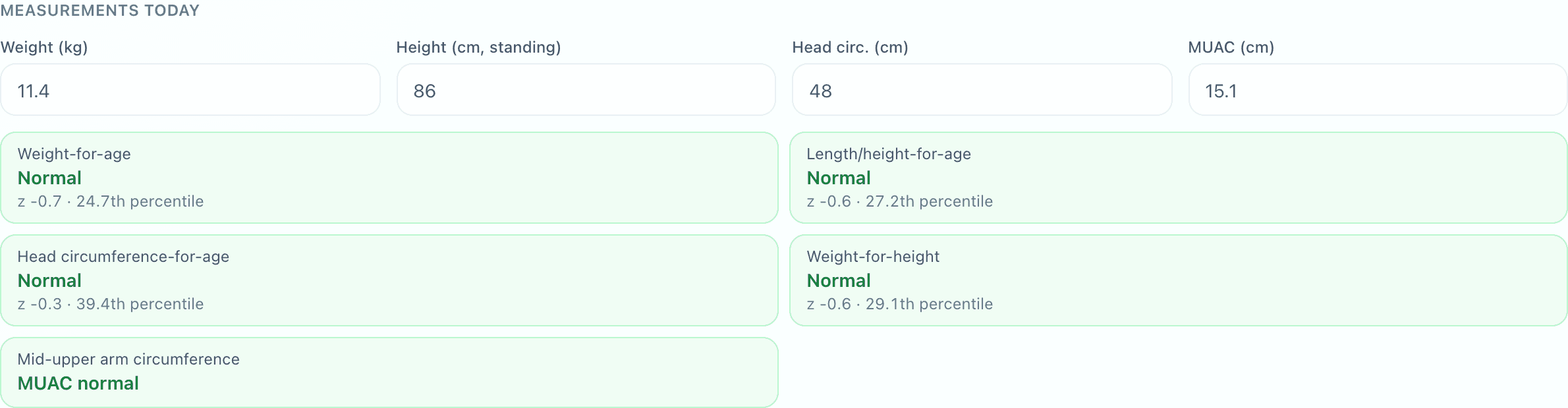
- Weight — the one everybody takes, and on its own the least informative.
- Length or height — lying down under two years, standing after. The standards differ between the two, so which was taken matters.
- Head circumference — under two, where it tracks brain growth and catches problems a weight never would.
- MUAC — mid-upper arm circumference, for acute malnutrition from about six months.
Units are where this goes wrong
Reading the chart
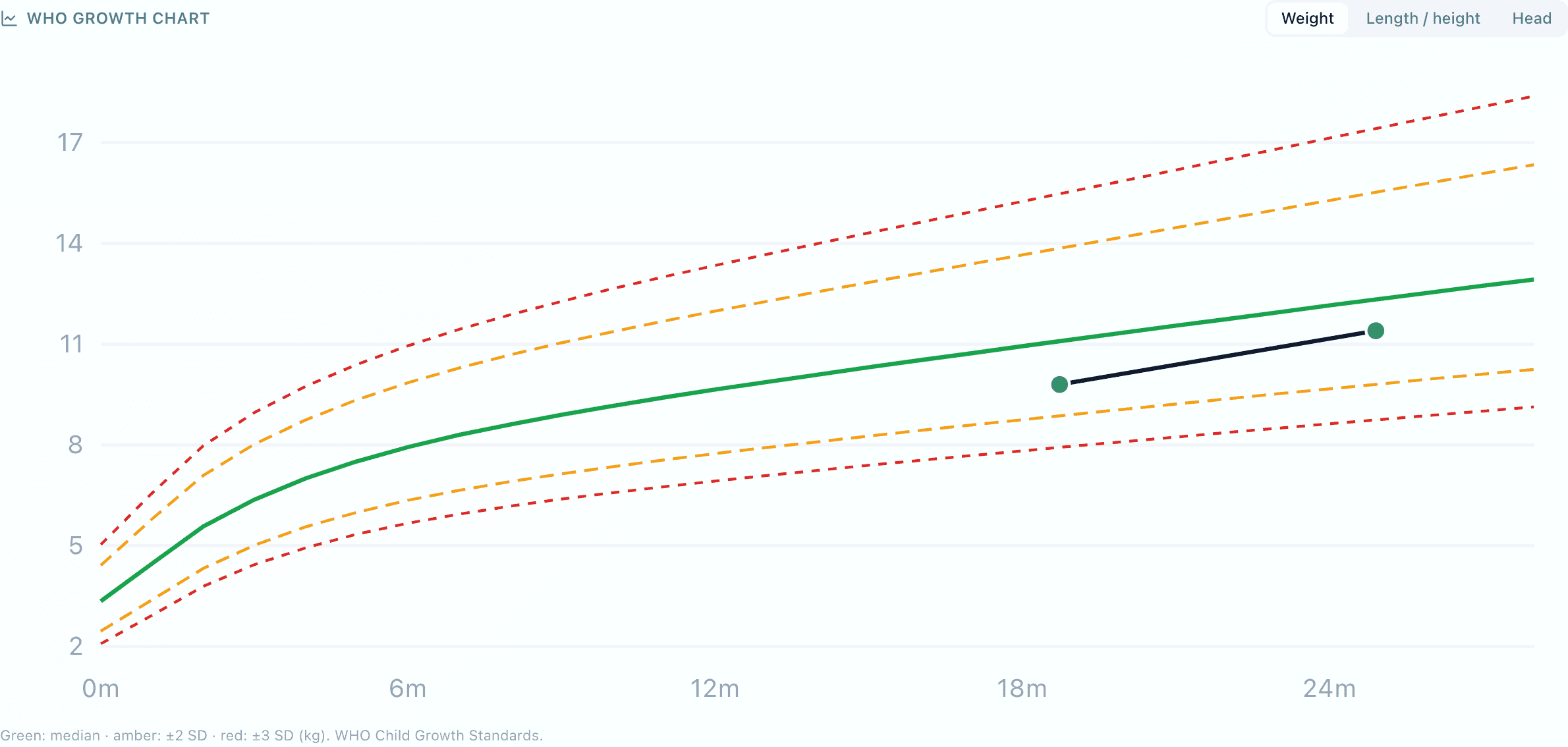
The green line is the median for that age and sex. The amber lines are two standard deviations either side, the red lines three. A z-score simply says which of those bands a child falls in:
- −2 to +2 — within the normal range.
- Below −2 — underweight (weight-for-age), stunted (length-for-age) or wasted (weight-for-length), depending on the measurement.
- Below −3 — the severe form of the same, and usually a referral.
- Above +2 — worth noting on weight-for-length, where it indicates overweight.
The value of the chart over the number is the direction. A child tracking steadily along the −1 line is usually fine. A child who was on the median and has crossed two lines downward needs attention even if today's weight still reads as normal — which is precisely what a column of weights in a paper file will not tell you.
Milestones alongside the measurements
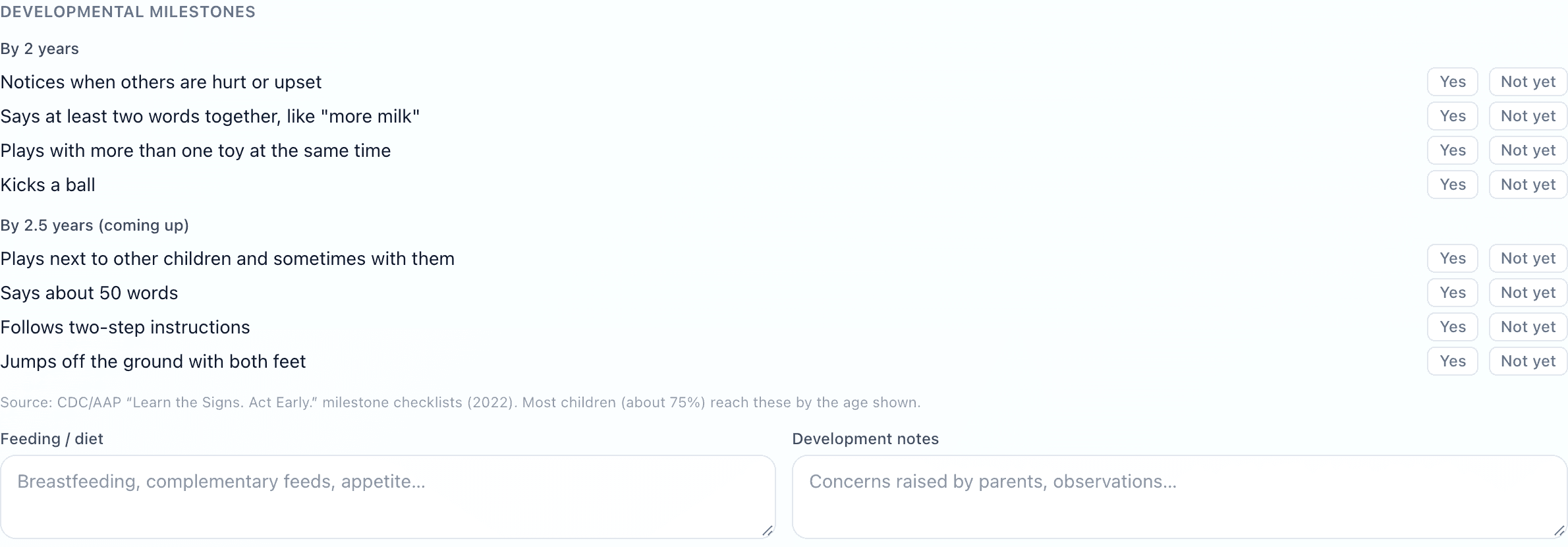
Growth and development are different questions, and the second is easy to skip in a busy OPD. Having the milestones for the child's current age in front of the doctor turns it into a prompt rather than something to remember — and a delay noticed at two is worth far more than one noticed at four.
Why the whole consultation matters
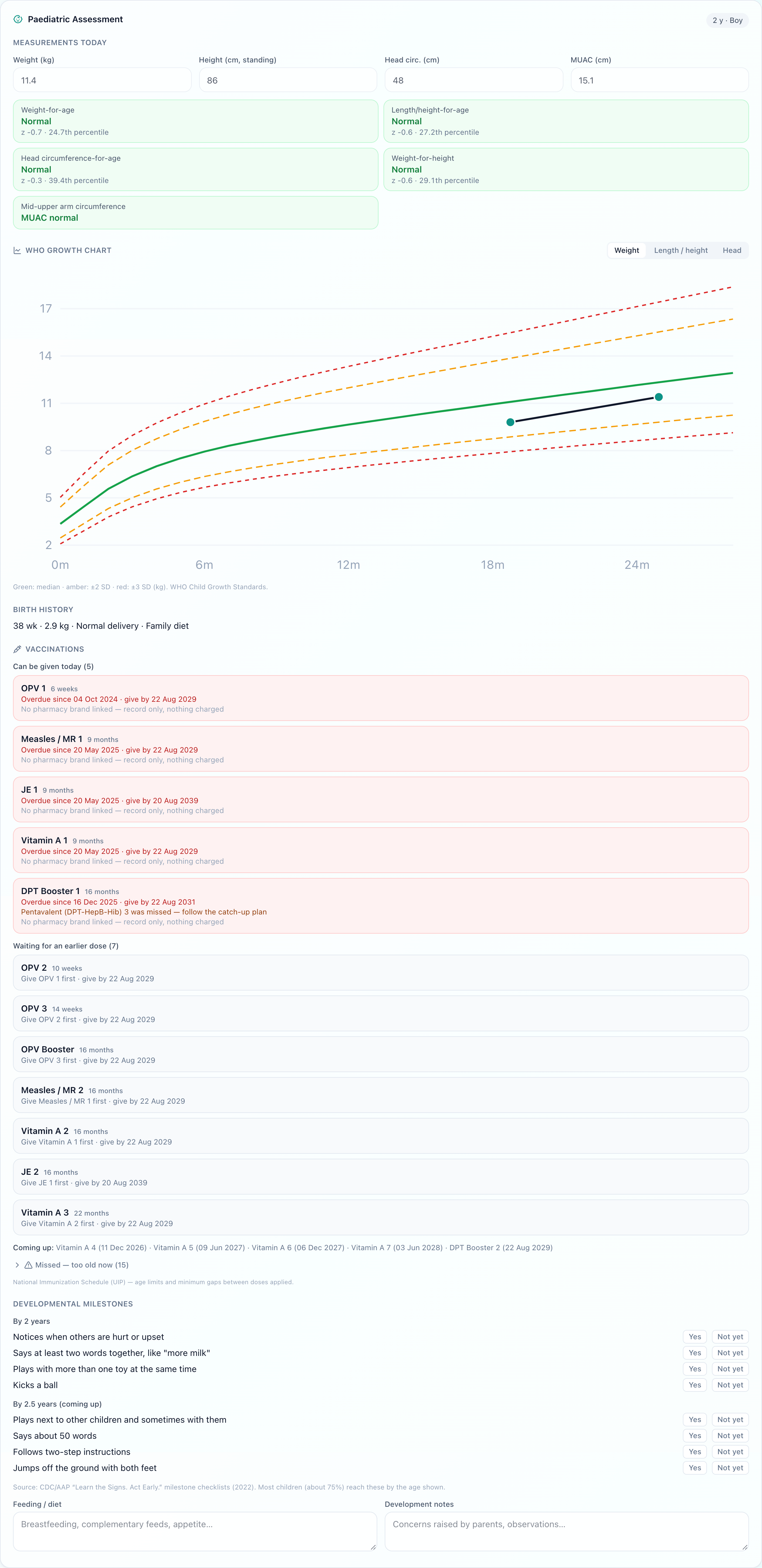
A paediatric visit is one flow: measure, plot, check what is due, ask about development. Splitting those across different screens is how the last two get skipped. Immunisation is covered on its own in the child immunisation guide.
What Uyirly does
- Weight, length or height, head circumference and MUAC captured at each visit.
- WHO Child Growth Standards for weight, length/height and head circumference, plotted against median, ±2 SD and ±3 SD.
- Every past measurement on the same chart, so the direction is visible, not just today's point.
- Each measurement checked against a plausible range, naming the field that looks wrong.
- Birth history — gestation, birth weight, delivery mode, feeding — kept with the child.
- Milestones for the child's current age shown during the consultation.
Getting started
Growth charts appear automatically in a consultation once a department is set to the paediatric template, as part of Uyirly's hospital management software. Start a 30-day free trial — no credit card.