A blood bank is a traceability problem wearing a fridge. Every unit has to be followed from the donor who gave it to the patient who received it, and at no point may an unscreened or incompatible unit reach a person. The software's job is to make the unsafe path impossible rather than merely discouraged.
What is on the shelf
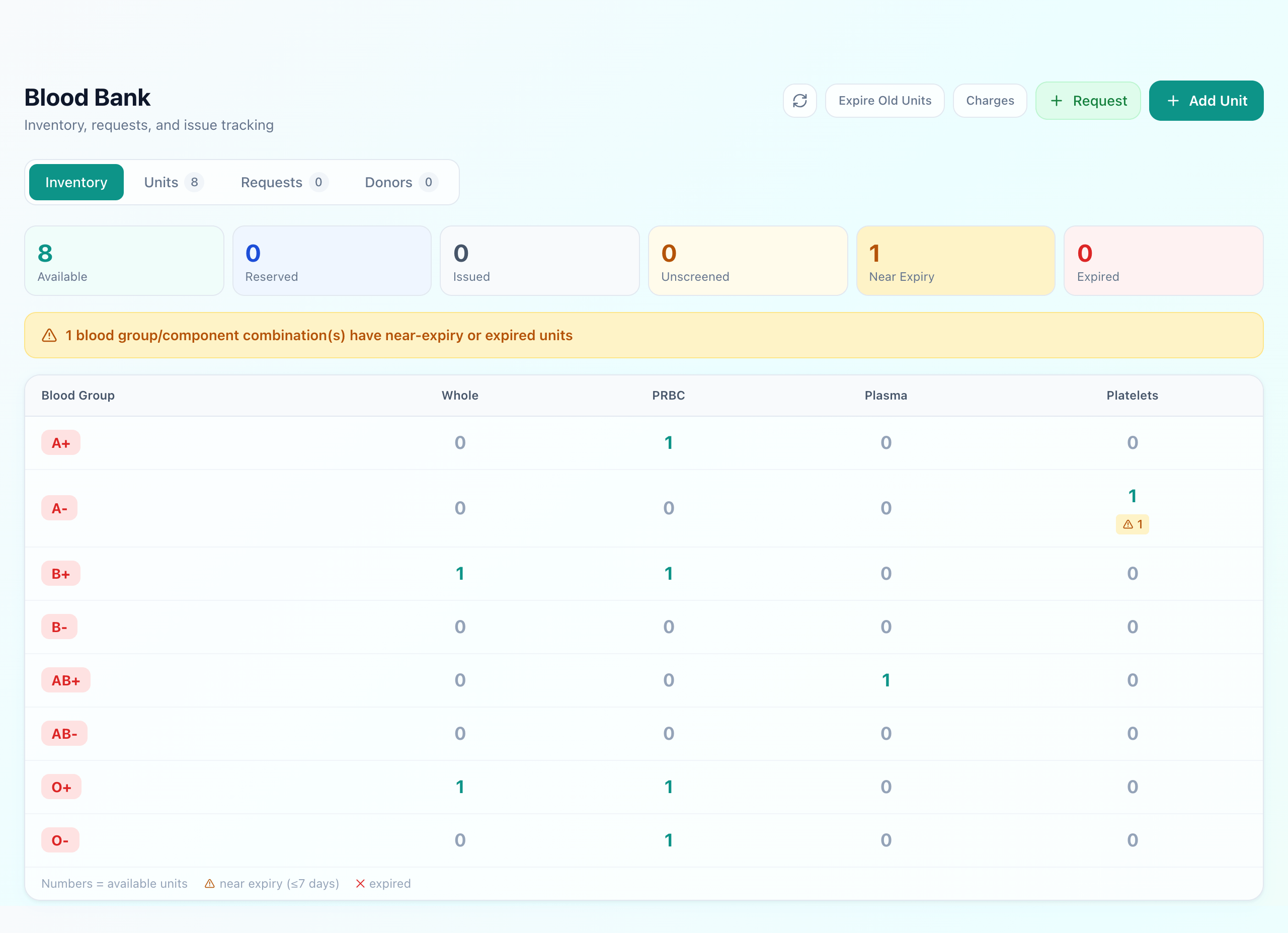
Stock is counted by group and componenttogether, because that is the request. A ward does not need “blood”; it needs O-negative packed cells, or platelets, and those are different shelves with very different expiry windows — platelets last days, plasma months.
Screening comes before availability
A donated unit is not stock until it has been screened for HIV, hepatitis B and C, syphilis and malaria, and each result is held against the unit rather than in a separate register. A unit that has not passed screening should not be offerable to anyone, which is a property of the data, not a matter of discipline.
Cross-match, then issue
A request from a ward names the patient, the group and the component. A unit is cross-matched against that request and the result recorded; only then does the request advance to a state where the unit can be issued. The gate is in the database — the issue is permitted because the cross-match exists, not because a screen allowed it.
Oldest compatible unit first, as with any dated stock, so short-dated components are used rather than discarded.
Traceability, both directions
Two questions have to be answerable years later: who received this donor's unit, and where did this patient's unit come from. Both are audit matters and occasionally public-health ones, which is why the bag number, the donor, the screening results, the cross-match and the recipient stay linked rather than living in separate books.
The issue charge posts to the patient's bill like any other, so a transfusion is not billed from memory.
What Uyirly does
- Availability by blood group and component, with each unit's bag number, volume and expiry.
- Screening results — HIV, HBsAg, HCV, syphilis, malaria — held on the unit, with unscreened units unavailable.
- Cross-match recorded against the request, and issue permitted only once it exists.
- Oldest compatible unit used first, with expiry tracked per component.
- Donor-to-recipient traceability in both directions, audit-logged.
- Issue charges posting to the patient's bill.
Getting started
The blood bank is part of Uyirly's hospital management software, sharing the patient record with the ward that requested the unit. Start a 30-day free trial — no credit card.